Hemorrhoids are one of the most common conditions affecting adults, yet many people suffer in silence because they’re embarrassed to seek help. If you’ve been dealing with discomfort, itching, or bleeding and have found yourself asking how long hemorrhoids last, you’re not alone. The good news is that most hemorrhoids are treatable and often resolve faster than people expect with the right care.
We believe that informed patients heal better. In this comprehensive guide, we cover everything from what causes hemorrhoids and how long different types last to proven strategies to speed up healing and signs a hemorrhoid is healing.
What Are Hemorrhoids?
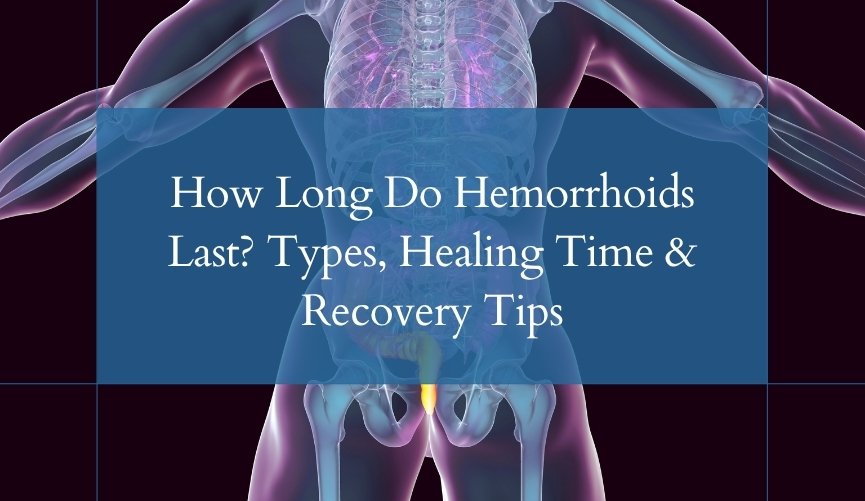
Hemorrhoids, also known as piles, are swollen, inflamed veins located in and around the rectum and anus. They function similarly to varicose veins and can develop due to increased pressure in the lower rectum. While anyone can develop hemorrhoids, they are particularly common in adults between the ages of 45 and 65.
Hemorrhoids are broadly classified into two types based on their location:
- Internal hemorrhoids are located inside the rectum, above the dentate line
- External hemorrhoids are located under the skin around the anus, below the dentate line
Both types can cause significant discomfort, and understanding the differences between them is essential when estimating healing time.
What Causes Hemorrhoids?
Before diving into how long hemorrhoids last, it helps to understand what causes hemorrhoids in the first place. Knowing the root cause makes it easier to prevent them from recurring.
Common Causes:
- Chronic constipation or diarrhea
- Straining during bowel movements
- Low-fiber diet
- Sitting on the toilet for prolonged periods
- Heavy lifting or strenuous physical activity
- Pregnancy and childbirth (increased pressure on pelvic veins)
- Obesity or excess body weight
- Sedentary lifestyle
- Aging (weakening of supporting tissues in the rectum and anus)
Understanding what causes hemorrhoids not only helps with treatment but also with long-term prevention. Many of these risk factors are lifestyle-related and can be managed with a few targeted changes.
How Long Do Hemorrhoids Last?
The duration of hemorrhoids depends on several factors, including the type (internal or external), severity, and whether you receive appropriate treatment. Here’s a general breakdown:
| Type | Mild Cases | Moderate Cases | Severe Cases |
| External | A few days | 1–2 weeks | Several weeks |
| Internal (Grade 1–2) | Days to 1 week | 2–3 weeks | Months (if untreated) |
| Thrombosed | 7–10 days (pain peaks at day 2–3) | 2–3 weeks | Requires medical treatment |
| Post-pregnancy | Days to 1 week | 2–4 weeks | May persist without care |
Do Hemorrhoids Go Away on Their Own?
One of the most frequently asked questions is: Do hemorrhoids go away on their own? The honest answer is sometimes, yes. Small hemorrhoids with mild symptoms can resolve on their own within a few days, especially with improved diet and hygiene habits.
However, this isn’t always the case. Without addressing the underlying causes (such as chronic straining or a low-fiber diet), hemorrhoids may return repeatedly or even worsen over time. Here’s what to consider:
- Grade 1 and 2 internal hemorrhoids often resolve without treatment if you increase fiber, stay hydrated, and avoid straining.
- Grade 3 and 4 internal hemorrhoids rarely go away on their own and typically require medical procedures.
- External hemorrhoids may take longer to resolve and are more likely to become thrombosed (blood clot formation), requiring medical attention.
- Thrombosed hemorrhoids almost always need to be seen by a healthcare provider for proper management.
While mild hemorrhoids can clear on their own, relying solely on time is not always advisable. Seeking care at Fattah Primary Care ensures you get the right diagnosis and an appropriate treatment plan.
How Long Do External Hemorrhoids Last?
External hemorrhoids develop under the skin around the anal opening. Because they’re located outside the body, they tend to cause more noticeable discomfort, including pain, itching, swelling, and sometimes bleeding.
Typical Duration:
- Mild external hemorrhoids: 3–7 days with home care
- Moderate cases: 1–2 weeks
- Thrombosed external hemorrhoids: 7–14 days; may need drainage if severe
Factors That Affect Duration:
- Size of the hemorrhoid
- Whether a blood clot has formed
- How quickly you begin home treatment
- Your overall lifestyle habits (diet, activity level)
If you are asking how long external hemorrhoids last and it has been more than two weeks without improvement, or your symptoms are getting worse, it is time to see a provider. Fattah Primary Care can assess your condition and recommend appropriate interventions.
How Long Do Internal Hemorrhoids Last?
Internal hemorrhoids form inside the rectum and are graded on a scale from 1 to 4, based on how much they prolapse (protrude outside the anal canal):
| Grade | Description | Expected Duration |
| Grade 1 | Hemorrhoid bulges into the canal but doesn’t prolapse | Days to 1–2 weeks with lifestyle changes |
| Grade 2 | Prolapses during straining but returns on its own | 1–3 weeks; often resolves with conservative care |
| Grade 3 | Prolapses and must be pushed back manually | Weeks to months; usually needs medical treatment |
| Grade 4 | Permanently prolapsed; cannot be reduced | Does not resolve on its own; requires procedures |
The key takeaway when wondering how long internal hemorrhoids last is that it depends heavily on grade. Early-stage hemorrhoids can often be managed at home with dietary changes and sitz baths, while advanced stages may require rubber band ligation, sclerotherapy, or surgical hemorrhoidectomy.
How to Speed Up Hemorrhoid Healing
If you want to recover faster, there are several evidence-based strategies that can significantly reduce healing time. Here is how to speed up hemorrhoid healing effectively:
1. Increase Dietary Fiber
A high-fiber diet softens stools, reducing straining during bowel movements — one of the primary triggers for hemorrhoid flare-ups. Aim for 25–35 grams of fiber daily from sources like:
- Whole grains (oats, brown rice, whole wheat bread)
- Fruits (pears, apples, berries, prunes)
- Vegetables (broccoli, carrots, leafy greens)
- Legumes (lentils, black beans, chickpeas)
2. Stay Well Hydrated
Drinking at least 8 glasses of water daily helps keep stools soft and prevents constipation, a major contributor to hemorrhoid development and delayed healing.
3. Take Sitz Baths
Soaking the anal area in warm water for 15–20 minutes, two to three times a day (especially after bowel movements), can relieve pain, reduce swelling, and promote healing. This is one of the simplest and most effective home remedies.
4. Use Over-the-Counter Treatments
Several topical products can provide temporary relief and support healing:
- Hydrocortisone creams reduce inflammation and itching
- Witch hazel pads soothe and shrink swollen tissue
- Hemorrhoid suppositories lubricate the anal canal and provide localized relief
5. Avoid Prolonged Sitting
Long periods of sitting, especially on the toilet, increase pressure on the anal veins. Limit toilet time to under five minutes and use a cushioned seat if needed during the day.
6. Get Moving
Gentle exercise such as walking promotes healthy bowel function and circulation. Avoid heavy lifting and high-impact activities until hemorrhoids have healed.
7. Maintain Proper Hygiene
After bowel movements, use unscented, soft, moist wipes or rinse with water instead of dry toilet paper. Harsh wiping increases irritation and delays healing.
8. Consider Medical Treatment When Needed
If home remedies are not working after 1–2 weeks, consulting a provider at Fattah Primary Care is the smartest next step. Medical options like rubber band ligation, sclerotherapy, or infrared coagulation are quick outpatient procedures with excellent success rates.
Signs a Hemorrhoid Is Healing
Not sure if you’re on the right track? Here are the key signs a hemorrhoid is healing that you should watch for:
- Reduced pain and discomfort: Pain typically peaks within the first 48–72 hours and then gradually diminishes.
- Less swelling and inflammation: The area around the anus should feel less inflamed and more comfortable over time.
- Decreased or no bleeding: Bleeding during bowel movements should gradually stop as the hemorrhoid shrinks.
- Reduced itching: Itching lessens as tissue heals and inflammation subsides.
- Improved bowel movements: Stools become easier to pass without straining or discomfort.
- Softening of the lump: For external hemorrhoids, the hard lump under the skin will soften and shrink as it heals.
- Return to normal activities: You are able to sit, walk, and perform daily tasks without pain.
If you experience worsening symptoms, new bleeding, fever, or a painful lump that does not improve within a week, these are NOT signs a hemorrhoid is healing; they are signs you need prompt medical attention.
When Should You See a Doctor?
While most hemorrhoids resolve with home care, certain signs indicate the need for professional evaluation:
| Symptom / Situation | Recommended Action |
| Rectal bleeding (bright red blood) | See a doctor to rule out serious conditions |
| Hemorrhoid not improving after 2 weeks | Schedule an appointment at Fattah Primary Care |
| Severe or worsening pain | Seek immediate evaluation |
| Prolapsed hemorrhoid that won’t retract | Medical or surgical treatment is required |
| Fever with anal discomfort | Could indicate infection, see a doctor promptly |
| Dark or tarry stools | Emergency evaluation needed (may signal upper GI bleed) |
Never ignore rectal bleeding or assume it’s always hemorrhoids. In some cases, similar symptoms can be associated with polyps, inflammatory bowel disease, or colorectal cancer, all of which require proper diagnosis.
Preventing Hemorrhoids from Coming Back
Once you’ve healed, prevention is the best strategy. Here are simple steps to keep hemorrhoids from recurring:
- Eat a diet rich in fiber every single day
- Drink plenty of water (at least 8 cups daily)
- Never ignore the urge to have a bowel movement
- Limit the time spent sitting on the toilet
- Exercise regularly to improve gut motility
- Maintain a healthy body weight
- Avoid heavy lifting without proper form
- Treat constipation or diarrhea promptly with appropriate medication
Conclusion
Mild hemorrhoids can resolve in a few days to a couple of weeks with proper home care. More severe cases, especially thrombosed external hemorrhoids or high-grade internal hemorrhoids, may require medical treatment to heal completely.
The most important thing you can do is not ignore your symptoms. Watching for signs that a hemorrhoid is healing is helpful, but if you’re not improving or your condition is worsening, the team at Fattah Primary Care is here to help.
FAQ’s
Q1.Can hemorrhoids last for months?
Yes. Without proper treatment, especially for Grade 3 or 4 internal hemorrhoids, the condition can persist for months or even become a chronic problem. Medical treatment significantly shortens the duration.
Q2. Are hemorrhoids dangerous?
Hemorrhoids themselves are rarely dangerous. However, chronic hemorrhoids can lead to anemia due to ongoing blood loss, and severe cases can cause significant pain and disruption to daily life.
Q3. Is it safe to treat hemorrhoids at home?
For mild to moderate cases, home remedies like sitz baths, a high-fiber diet, and OTC topical treatments are safe and effective. However, if symptoms don’t improve within 1–2 weeks or if you notice warning signs like heavy bleeding, see a provider.
Q4. Do hemorrhoids come back after healing?
They can, particularly if underlying risk factors aren’t addressed. Adopting a high-fiber diet, staying hydrated, and maintaining healthy bowel habits are the best ways to prevent recurrence.
Q5.Can hemorrhoids become permanent?
Hemorrhoids can persist for a long time if left untreated, especially when caused by chronic constipation or straining. However, many cases improve with lifestyle changes, medications, or medical treatment.
Q6. What makes hemorrhoids heal faster?
Increasing fiber intake, drinking plenty of water, and avoiding straining during bowel movements can help hemorrhoids heal more quickly. Warm sitz baths and over-the-counter treatments may also provide relief and support recovery