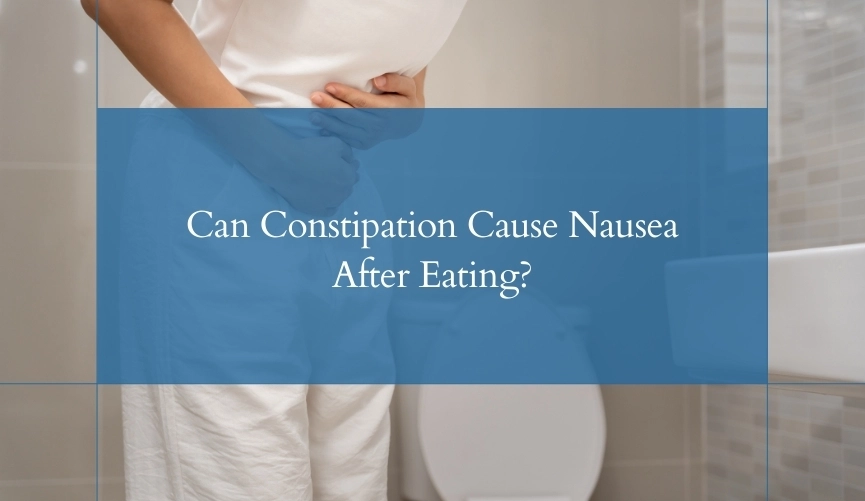
Yes, constipation can cause nausea after eating. When your digestive system slows down, it affects how food moves through your body, often leading to discomfort that becomes more noticeable after meals.
Many people experience a queasy feeling shortly after eating and don’t immediately connect it to constipation. However, the two are closely linked through digestion and gut movement.
What Happens in Your Body After Eating When You’re Constipated?
After you eat, your body activates a natural process called the gastrocolic reflex, which signals your intestines to make room for incoming food.
If you are constipated, this process doesn’t work efficiently. Instead of moving waste forward, your digestive system is already backed up. Adding more food increases pressure in the abdomen, which can trigger nausea.
At the same time:
- Digestion slows down
- The stomach may empty more slowly
- Gas and bloating increase
This combination is why many people feel nauseated after eating when constipated.
Why Do I Feel Nauseous After Eating When Constipated?
If you’re asking, “why do I feel nauseous after eating and constipated?”, the answer usually comes down to how your gut handles food.
Key reasons include:
- Delayed digestion
Food stays longer in the stomach and intestines, increasing discomfort after meals - Increased abdominal pressure
Stool buildup creates pressure that worsens when you eat - Bloating and gas
These expand after meals and contribute to a sick feeling - Heightened gut sensitivity
A slowed digestive system becomes more reactive to food
These factors make post-meal nausea a common symptom in people dealing with constipation.
Common Symptoms You May Notice
When constipation is affecting your digestion, nausea after meals is often accompanied by:
- Bloating and a feeling of fullness
- Gas or flatulence
- Abdominal discomfort or cramping
- Reduced appetite
- Feeling overly full after small meals
- Difficulty passing stool
These symptoms tend to intensify after eating because your digestive system is already under strain.
What Causes Constipation That Leads to Nausea After Meals?
Several factors can slow digestion and lead to symptoms that worsen after eating:
Low Fiber Intake
A lack of fiber makes stool harder to pass. This slows digestion and can make post-meal discomfort more noticeable.
Dehydration
Not drinking enough water leads to dry stools and sluggish bowel movement, increasing pressure after meals.
Slow Gut Motility
When intestinal movement is slow, food and waste remain in the system longer, contributing to nausea after eating.
Irritable Bowel Syndrome (IBS)
IBS can disrupt normal bowel patterns and make the digestive system more sensitive to food.
Medications
Some medications can slow bowel activity, which may lead to both constipation and nausea, especially after meals.
How to Relieve Constipation and Post-Meal Nausea
Improving bowel movement usually helps reduce nausea. Here are effective ways to manage both:
Increase Fiber Gradually
Add fruits, vegetables, and whole grains to your diet to support smoother digestion.
Stay Well Hydrated
Water helps soften stool and improve overall gut function.
Eat Smaller, Lighter Meals
Large meals can increase pressure in the digestive system. Smaller portions are easier to process.
Stay Physically Active
Regular movement helps stimulate intestinal contractions and supports regular bowel movements.
Consider Over-the-Counter Options
Fiber supplements or stool softeners may help if lifestyle changes are not enough.
When to Worry About Constipation and Nausea
Occasional symptoms are common, but some signs should not be ignored.
Seek medical attention if you experience:
- Severe or persistent abdominal pain
- Ongoing nausea or vomiting
- Unexplained weight loss
- Blood in your stool
- Constipation lasting several weeks
These symptoms may indicate a more serious digestive condition that requires evaluation.
Bottom Line
Constipation can directly contribute to nausea after eating due to slow digestion, increased abdominal pressure, and changes in gut function. While these symptoms can be uncomfortable, they are often manageable with simple lifestyle changes such as improving diet, staying hydrated, and maintaining regular physical activity.
However, if your symptoms persist or worsen, it is important to seek medical evaluation to rule out underlying conditions and receive appropriate care. At Fattah Primary Care, we focus on identifying the root cause of digestive issues and providing personalized treatment plans to help you feel better and restore your digestive health.
FAQ’s
Does constipation cause nausea after meals?
Yes, slowed digestion and increased abdominal pressure can lead to nausea after eating.
Can constipation make you feel sick after eating?
Yes, eating adds to an already slow digestive system, which can trigger discomfort and nausea.
Is nausea a symptom of constipation?
It can be. When digestion slows, it may lead to bloating, fullness, and a queasy feeling.
Why does nausea get worse after eating?
Because food increases pressure in the digestive system, especially when bowel movement is delayed.