If you’re sitting there with a throbbing sore inside your mouth and wondering how long canker sores last, the good news is that most clear up on their own within 1 to 2 weeks. Larger ones, though rare, can linger for up to 5 weeks.
But there’s a lot more to understand about the canker sore timeline, from the moment that first tingle begins to the day it finally disappears. Let’s break it all down.
What Exactly Is a Canker Sore?
A canker sore, medically known as an aphthous ulcer, is a small, painful lesion that forms on the soft tissues inside your mouth. Unlike cold sores, canker sores are not contagious and do not appear on the outer lips.
They can develop on:
- The inner cheeks and lips
- The tongue (top, bottom, or sides)
- The gums
- The roof of the mouth
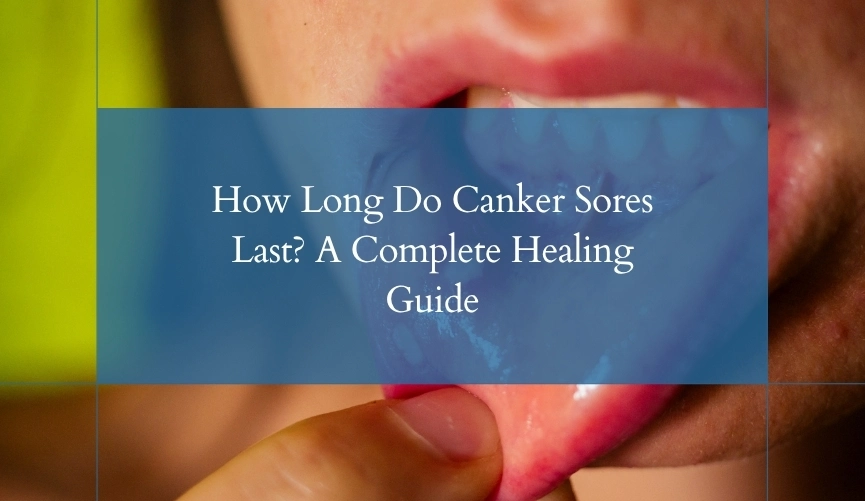
Visually, they typically appear as a pale white or yellowish oval surrounded by a red, inflamed border. As healing progresses, the center may shift to a grayish hue. Most are small, roughly the size of a pencil eraser, though in rare cases they can grow significantly larger or deeper.
Why Do Canker Sores Hurt So Bad?
This is one of the most common questions people ask, and for good reason. Even a tiny canker sore can feel unbearable. Why do canker sores hurt so badly? Because the ulcer exposes the nerve endings in the soft mucosal tissue of your mouth, tissue that has no protective outer layer like skin does. Every time food, drink, your tongue, or even air touches the sore, those exposed nerves fire pain signals directly.
The first 3 to 4 days of the open sore stage are typically the most intense. The pain gradually diminishes as the tissue begins to rebuild and the ulcer closes.
The Canker Sore Timeline: Stage by Stage
Understanding the canker sore healing stages helps you know what to expect and recognize when something might be off.
Stage 1: Prodromal (Pre-Sore) Stage: Days 1–3
Before a sore even appears, many people notice a burning, tingling, or prickling sensation in a specific spot inside the mouth. This is your body’s early warning signal. Not everyone picks up on it, but those who do often find they can start treatment earlier and minimize discomfort.
Stage 2: Ulcer
A small red bump forms and quickly opens into a full sore. This is the peak pain phase. The sore is raw, tender, and especially reactive to anything that touches it, food, drinks, toothpaste, and even speech.
This is also the stage where most people wonder: how long does it take for a canker sore to heal? For minor sores, you’re usually in this stage for about a week.
Stage 3 Healing Stage: Days 10–14
Signs a canker sore is healing include:
The sore is visibly shrinking in size
Pain is becoming noticeably less intense
The border is losing its angry red appearance
The center fades from white/yellow toward gray or pink
This final phase typically wraps up within a few days, completing the full healing cycle.
How Long Does It Take for Canker Sores to Go Away? (By Type)
Not all canker sores follow the same canker sore timeline. Here’s a breakdown by severity:
| Type | Size | Duration |
| Minor (most common) | Under 10mm | 7–14 days |
| Major (less common) | Over 10mm, deeper | 3–6 weeks |
| Herpetiform (clusters) | Multiple small sores | 1–2 weeks |
How long it takes to get rid of a canker sore depends on which type you’re dealing with. Major canker sores are the outliers; they’re rare, significantly more painful, and almost always warrant a visit to a healthcare provider.
What Causes Canker Sores?
This is where things get a little frustrating: the exact cause is often unknown. However, research and patient patterns have pointed to several consistent triggers.
What Triggers a Canker Sore?
What triggers a canker sore varies from person to person, but common culprits include:
- Physical injury, such as accidentally biting your cheek, rough dental work, or ill-fitting braces
- Stress and fatigue, emotional stress is a well-documented trigger
- Hormonal shifts, particularly around menstruation
- Certain toothpaste ingredients, such as sodium lauryl sulfate (SLS), have been linked to increased frequency
- Smoking, though, ironically, some people experience more canker sores after quitting
- Nutritional deficiencies, such as low iron, vitamin B12, zinc, or folate can make you more susceptible
Underlying Health Conditions
If you’re experiencing frequent or unusually large sores, they may be a symptom of a deeper issue, including:
- Celiac disease
- Crohn’s disease or ulcerative colitis
- Lupus
- Behçet’s disease
- HIV
- Anemia
Recurring canker sores are worth discussing with a doctor, they may be pointing to something your body needs attention for.
What Foods to Avoid When You Have a Canker Sore
Diet plays a huge role in how comfortable (or miserable) you feel during the ulcer stage. Knowing what foods to avoid when you have a canker sore can significantly reduce your daily pain level.
Avoid these during flare-ups:
- Acidic foods and drinks, such as citrus fruits, tomatoes, vinegar-based dressings, and fruit juices, will sting intensely
- Spicy foods, such as capsaicin and other spice compounds, directly aggravate open sores
- Salty snacks, chips, pretzels, and heavily salted foods create a painful osmotic effect on exposed tissue
- Hard, crunchy foods, such as crackers, crusty bread, and granola, can physically scrape the sore
- Very hot foods or beverages heat increases inflammation and sensitivity
- Carbonated drinks, the bubbles aren’t your friend here
- Alcohol acts as an irritant and can slow the healing process
What to eat instead: Soft, cool, neutral foods like yogurt, oatmeal, mashed potatoes, smoothies, and cold water are your best allies during healing.
How to Speed Up Healing: Home Remedies & Medical Treatments
Home Remedies That Actually Help
- Saltwater rinse : Dissolve one teaspoon of salt in a cup of warm water and swish gently for 30 seconds. This promotes wound healing and reduces bacterial load.
- Honey: Raw honey has documented antibacterial and anti-inflammatory properties. Apply a small amount directly to the sore up to 4–5 times daily.
- Hyaluronic acid gel : Available OTC, this hydrates and protects the sore’s surface while supporting tissue repair.
- Cold, smooth foods: While not a treatment, cold yogurt or ice chips can temporarily numb the area and reduce inflammation.
Over-the-Counter Options
- Benzocaine gel (e.g., Orajel) topically numbs the sore for temporary pain relief
- Dyclonine lozenges (Sucrets) dissolve slowly to numb the mouth
- Diphenhydramine + Milk of Magnesia rinse mix equal parts, swish for one minute, and spit
Prescription Treatments (For Severe Cases)
If you’re dealing with a major canker sore or multiple sores, a doctor may prescribe:
- Viscous lidocaine a stronger numbing agent
- Chlorhexidine gel is an oral disinfectant to prevent secondary infection
- Topical corticosteroids: triamcinolone paste, dexamethasone elixir, or clobetasol gel
- Sucralfate suspension a coating agent applied as a swish-and-spit rinse
Canker Sore vs. Cold Sore: Don’t Confuse Them
These two conditions are commonly confused, but they’re completely different. These two conditions are commonly confused, but they’re completely different.
| Feature | Canker Sore | Cold Sore |
| Location | Inside the mouth only | Outside on or around the lips |
| Appearance | White/pale oval with red ring | A fluid-filled blister may crust |
| Cause | Unknown/multiple triggers | Herpes simplex virus (HSV-1) |
| Contagious? | No | Yes |
When Should You See a Doctor?
- Most canker sores resolve without medical intervention. But see a healthcare provider if:
- The sore lasts longer than 2 weeks with no signs of improvement
- You’re struggling to eat or drink enough due to pain
- The sore is unusually large or deep
- You have accompanying symptoms like fever, swollen lymph nodes, or fatigue
- You’re experiencing repeated episodes multiple times a year or in clusters
Conclusion
Canker sores may be small, but they can cause significant discomfort and disrupt your daily routine. The good news is that most heal naturally within 7 to 14 days, following a predictable cycle from early irritation to full recovery. By understanding the stages, identifying your personal triggers, and using the right home remedies or treatments, you can manage pain effectively and even speed up the healing process.
However, if your sores are unusually large, persist beyond two weeks, or keep coming back frequently, it’s important to seek professional medical advice. If you’re experiencing ongoing or severe oral discomfort, don’t ignore it; get expert guidance and care from professionals at Fattah Primary Care. Taking proactive steps today can help you reduce future flare-ups and maintain better overall oral health.
FAQs
Q1. How long does it take for canker sores to go away if I don’t treat them?
Ans: Most minor canker sores resolve on their own in 7–14 days without any treatment.
Q2. Can stress really cause canker sores?
Ans: Yes , stress is one of the most commonly reported triggers. Managing stress may help reduce the frequency in prone individuals.
Q3. Is there any way to prevent canker sores entirely?
Ans: There’s no guaranteed prevention, but avoiding known personal triggers, switching to an SLS-free toothpaste, managing stress, and addressing nutritional deficiencies can significantly reduce recurrence.
Q4. Can canker sores be a sign of a weak immune system?
Ans: Not necessarily, though frequent outbreaks may warrant checking for underlying conditions or deficiencies.