Have you been eating well, staying active, and still watching the number on the scale creep up? If you have PCOS, that experience is more common than you might think.
Many women feel frustrated when they gain weight despite making healthy choices. Naturally, one of the first questions they ask is, “Can PCOS cause weight gain?”
The short answer is yes. PCOS can affect the way your body processes insulin, stores fat, and regulates hormones, making weight gain easier and weight loss more challenging. Understanding why this happens is the first step toward taking control of your health.
Understanding why this happens can help you take the right steps toward managing your symptoms and improving your overall health.
What Is PCOS?
Polycystic Ovary Syndrome (PCOS) is a hormonal disorder that affects women of reproductive age. It occurs when the ovaries produce higher-than-normal levels of androgens, often referred to as male hormones.
Common symptoms of PCOS include:
- Irregular or missed periods
- Excess facial or body hair
- Acne
- Difficulty becoming pregnant
- Thinning hair
- Weight gain
- Insulin resistance
PCOS is one of the most common endocrine disorders among women and is closely linked to metabolic health.
Why Does PCOS Cause Weight Gain?
Many women assume weight gain is simply the result of eating too much or exercising too little. However, PCOS affects the body’s internal systems in ways that can make weight management significantly more challenging.
Several factors contribute to PCOS-related weight gain:
Hormonal Imbalances
Women with PCOS often have elevated androgen levels. These hormones can influence how the body stores fat, particularly around the abdomen.
Increased Hunger Signals
Hormonal disruptions may affect appetite-regulating hormones, leading to increased cravings and hunger.
Slower Metabolic Function
Some women with PCOS experience metabolic changes that reduce calorie-burning efficiency.
Chronic Inflammation
Research suggests that low-grade inflammation associated with PCOS may contribute to weight gain and insulin resistance.
The Connection Between Insulin Resistance and PCOS
One of the biggest reasons PCOS causes weight gain is insulin resistance.
Insulin is a hormone responsible for moving glucose from the bloodstream into cells for energy. When cells become resistant to insulin, the body compensates by producing more of it.
High insulin levels can:
- Promote fat storage
- Increase cravings for carbohydrates
- Make weight loss more difficult
- Raise the risk of Type 2 Diabetes
Studies estimate that a significant percentage of women with PCOS also have insulin resistance, even if they are not overweight.
This is why addressing insulin resistance is often a key component of successful PCOS treatment.
What Is a “PCOS Belly” and Why Does It Happen?
If you’ve noticed that most of your weight gain seems to settle around your stomach, you’re not imagining it.
Many women with PCOS develop excess abdominal fat, often referred to online as a “PCOS belly.” While the term isn’t an official medical diagnosis, it describes a very real pattern of weight gain linked to insulin resistance and hormonal imbalance.
This type of fat tends to be more stubborn than fat stored in other parts of the body and may increase the risk of future health problems such as diabetes and heart disease.
Does PCOS Make It Harder to Lose Weight?
Yes.
Many women with PCOS report that traditional weight-loss methods do not produce the same results they see in others.
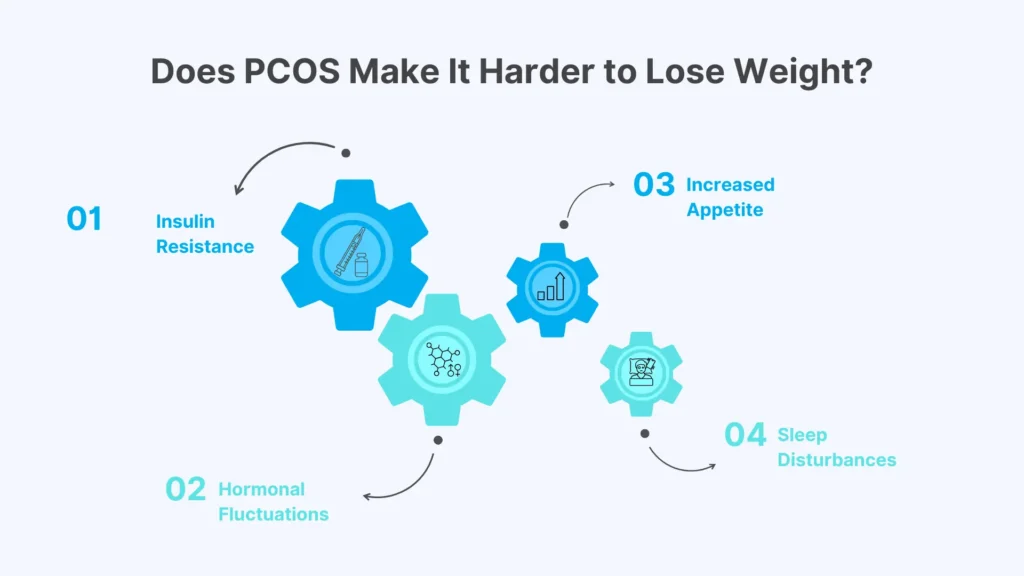
Several factors contribute to this challenge:
Insulin Resistance
The body stores fat more easily when insulin levels remain elevated.
Hormonal Fluctuations
Changes in estrogen, progesterone, and androgen levels can impact metabolism.
Increased Appetite
PCOS may affect hunger and satiety signals, making it harder to maintain a calorie deficit.
Sleep Disturbances
Women with PCOS have higher rates of sleep disorders, which can negatively affect weight management.
The good news is that weight loss is still achievable with the right treatment strategy and medical support.
A Common Experience Among Women With PCOS
Sarah, a 29-year-old patient, came into our clinic feeling frustrated. Over the past year, she had gained nearly 20 pounds despite maintaining the same eating habits.
She blamed herself at first, assuming she wasn’t trying hard enough.
After a thorough evaluation, she learned that untreated PCOS and insulin resistance were contributing to her weight gain.
Once she received the right guidance, made targeted lifestyle changes, and addressed the underlying hormonal issues, she began seeing gradual improvements.
While every patient is different, Sarah’s experience reflects a challenge many women with PCOS face every day.
(You can use a disclaimer that this is a representative example.)
Can You Have PCOS Without Weight Gain?
Absolutely.
Not every woman with PCOS is overweight.
A condition known as Lean PCOS occurs when women have PCOS symptoms despite maintaining a normal body weight.
Women with Lean PCOS may still experience:
- Irregular periods
- Acne
- Excess hair growth
- Infertility
- Insulin resistance
This highlights an important point: while weight gain is common in PCOS, it is not required for diagnosis.
Other Symptoms That Often Accompany PCOS Weight Gain
Weight gain rarely occurs in isolation.
Women with PCOS may also experience:
- Irregular menstrual cycles
- Excess facial hair
- Hair thinning
- Acne
- Mood changes
- Fatigue
- Difficulty getting pregnant
- Darkened skin patches
- Elevated blood sugar levels
Recognizing these symptoms early can help women seek appropriate medical care before complications develop.
Can Weight Loss Improve PCOS Symptoms?
In many cases, yes.
Even modest weight loss can have a meaningful impact on PCOS symptoms.
Benefits may include:
- Improved insulin sensitivity
- More regular menstrual cycles
- Reduced androgen levels
- Better fertility outcomes
- Lower blood sugar levels
- Improved cholesterol levels
- Reduced cardiovascular risk
For some women, losing just 5% to 10% of their body weight can lead to noticeable improvements.
Best Treatments for PCOS-Related Weight Gain
Managing PCOS weight gain often requires a combination of lifestyle modifications and medical support.
1. Nutrition Changes
Focus on:
- Lean proteins
- High-fiber foods
- Whole grains
- Vegetables
- Healthy fats
Reducing highly processed carbohydrates may help improve insulin sensitivity.
2. Regular Physical Activity
A combination of:
- Strength training
- Walking
- Cardio exercise
- Resistance training
can support weight management and metabolic health.
3. Medical Weight Management
Women who struggle with significant weight gain may benefit from physician-supervised treatment plans.
At Fattah Primary Care, patients seeking support for PCOS-related weight concerns may benefit from our Weight Loss Management services, which focus on individualized treatment strategies designed to improve long-term health outcomes.
4. GLP-1 Therapy
For eligible patients, newer medications may help support weight loss and improve metabolic health.
Our GLP-1 Treatment program may be appropriate for individuals who need additional support beyond diet and exercise alone.
5. Hormonal Management
Since hormone regulation plays an important role in PCOS treatment, some women may also benefit from discussing contraceptive options with their healthcare provider.
Our Birth Control services can help women explore treatment options that may assist with cycle regulation and symptom management.
When Should You See a Doctor?
You should consider speaking with a healthcare provider if you experience:
- Rapid or unexplained weight gain
- Irregular periods
- Difficulty losing weight despite lifestyle changes
- Excess facial hair growth
- Fertility concerns
- Symptoms of insulin resistance
Early diagnosis and treatment can help prevent long-term complications such as Type 2 Diabetes, cardiovascular disease, and metabolic syndrome.
At Fattah Primary Care, our team provides personalized evaluations and treatment plans to help women better understand and manage PCOS symptoms while improving overall wellness.
Conclusion
So, can PCOS cause weight gain? The evidence strongly suggests that it can. Hormonal imbalances, insulin resistance, inflammation, and metabolic changes all contribute to the challenges many women face when managing their weight with PCOS.
While losing weight with PCOS may require a more targeted approach, effective treatment options are available. Through lifestyle modifications, medical guidance, and personalized care, many women successfully improve their symptoms and achieve better long-term health.
At Fattah Primary Care, we help patients take control of their health through comprehensive primary care services, including Weight Loss Management, GLP-1 Treatment, and Birth Control counseling tailored to each individual’s needs and goals.
Frequently Asked Questions
Can PCOS cause rapid weight gain?
Yes. Hormonal imbalances and insulin resistance can sometimes lead to faster-than-expected weight gain, particularly around the abdomen.
Does everyone with PCOS gain weight?
No. Some women have Lean PCOS and maintain a normal body weight despite having the condition.
Why is it so hard to lose weight with PCOS?
Insulin resistance, hormonal changes, inflammation, and appetite regulation issues can all make weight loss more challenging.
Can losing weight reverse PCOS?
There is currently no cure for PCOS, but weight loss may significantly improve symptoms and reduce associated health risks.
What foods should women with PCOS avoid?
Limiting highly processed foods, sugary beverages, and refined carbohydrates may help improve insulin sensitivity and support weight management.
Can GLP-1 medications help women with PCOS lose weight?
For some patients, GLP-1 medications may support weight loss and improve metabolic health when prescribed and monitored by a healthcare professional.