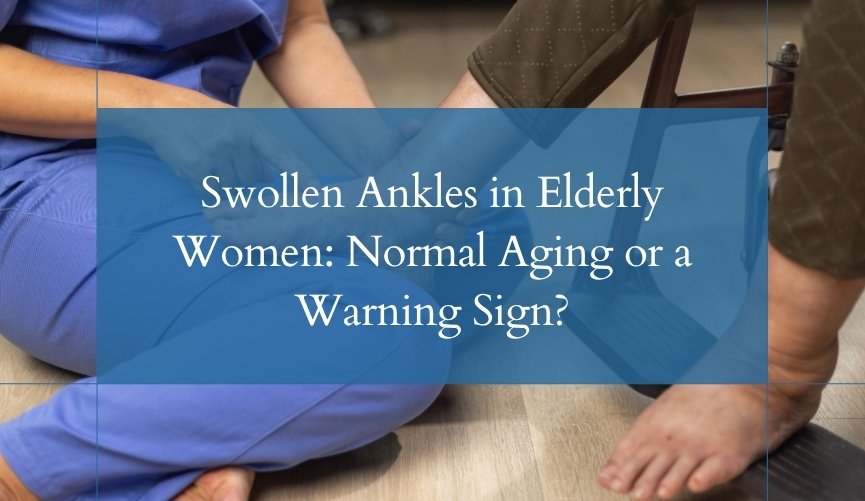
Noticing puffiness around the ankles at the end of a long day is common, but for many older women, swollen ankles become a regular, sometimes uncomfortable, part of life. While occasional mild swelling can be harmless, persistent or worsening swelling deserves attention.
The most common causes, the symptoms to watch for, home remedies that actually help, and the point at which swollen ankles in elderly women patients should be evaluated by a physician.
Is ankle swelling a normal part of aging? What symptoms tend to accompany it, which medical conditions are most often responsible, how swelling can be reduced at home, when it is time to see a doctor, and how the condition is typically diagnosed and treated. By the end, you should have a clear framework for deciding whether your swelling, or a loved one’s, needs a simple lifestyle adjustment or a medical evaluation.
Is Ankle Swelling a Normal Part of Aging?
Mild ankle swelling can occur more often as people age, but that does not mean it should be dismissed as “just getting older.” As the body ages, veins lose some of their elasticity, valves that push blood back toward the heart become less efficient, and skin loses collagen, which can make swelling more visible and slower to resolve.
That said, aging alone rarely causes significant or one-sided swelling. When swelling is mild, disappears overnight, and affects both ankles evenly, it is often related to circulation changes, prolonged sitting or standing, or minor fluid retention. When it is severe, sudden, painful, or limited to one leg, it is not a normal aging change and should be checked promptly.
| Feature | Likely Normal | Needs Medical Attention |
| Onset | Gradual, end of day | Sudden, within hours |
| Sides affected | Both ankles evenly | One leg only |
| Pain | Mild or none | Sharp, severe, or tender to touch |
| Skin color | Normal | Red, warm, or discolored |
| Breathing | Unaffected | Shortness of breath present |
| Improves with rest/elevation | Yes, within hours | Little to no improvement |
What Causes Swollen Ankles in Elderly Women?
There are several reasons swollen ankles in elderly women patients occur more frequently than in younger adults. Some causes are lifestyle-related, while others point to a medical condition that needs treatment.
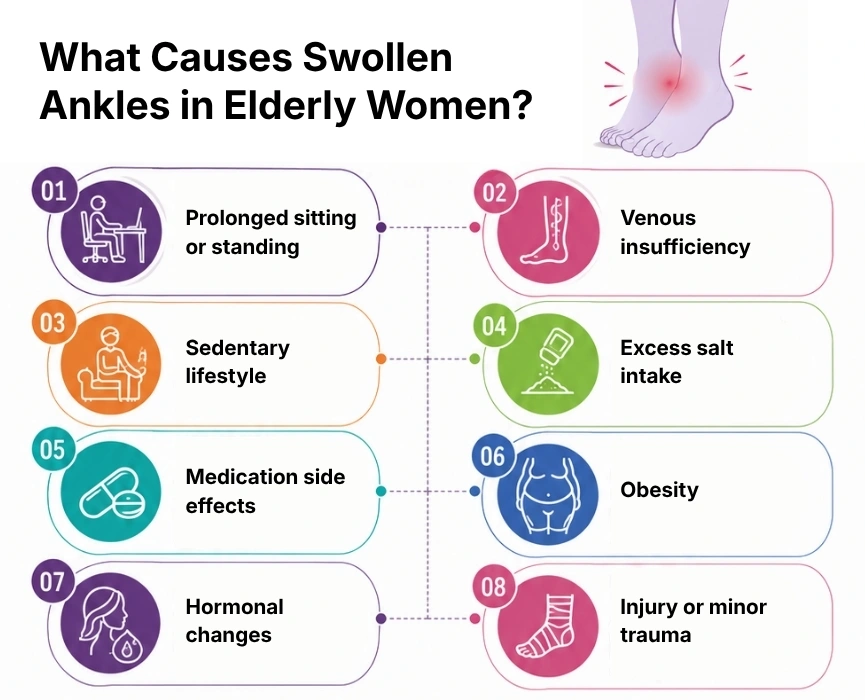
- Prolonged sitting or standing: Reduced movement makes it harder for blood to circulate back up from the legs.
- Venous insufficiency: Weakened vein valves allow blood to pool in the lower legs, a common issue with age.
- Sedentary lifestyle: Limited mobility, which is more common among older adults, slows circulation.
- Excess salt intake: High-sodium diets cause the body to retain more fluid.
- Medication side effects: Blood pressure medications, steroids, and anti-inflammatory drugs are frequent culprits.
- Obesity: Extra body weight places additional pressure on leg veins. Carrying extra body weight places added pressure on leg veins. If weight is a contributing factor, our Weight Loss Management program can help create a plan suited to your needs.
- Hormonal changes: Post-menopausal hormone shifts can affect fluid balance.
- Injury or minor trauma: Even a small sprain can cause localized swelling that lingers.
In many cases, more than one factor is at play, which is why a proper evaluation is often needed to identify the exact cause rather than assuming it is simply fluid retention.
What Symptoms Can Occur With Swollen Ankles?
Swelling rarely shows up alone. Paying attention to accompanying symptoms helps determine whether the cause is minor or something that requires medical care.
- Tight, shiny, or stretched-looking skin around the ankle
- Puffiness that leaves an indentation when pressed (pitting edema)
- Aching, heaviness, or fatigue in the legs
- Difficulty fitting into shoes or socks, leaving deep marks on the skin
- Warmth or redness over the swollen area
- Stiffness or reduced range of motion in the ankle joint
- Skin discoloration, ranging from reddish to bluish-brown
In more serious cases: shortness of breath, chest discomfort, or sudden severe pain
If swelling is paired with breathing difficulty, chest pain, or confusion, this is an emergency and requires immediate medical attention rather than home management.
It helps to track symptoms over a few days: note the time of day swelling is worst, whether it improves overnight, and whether it affects one leg or both. This simple record can speed up diagnosis considerably, since it gives a physician a clearer picture of the pattern rather than a single snapshot taken during an office visit.
What Medical Conditions Can Cause Swollen Ankles?
While lifestyle factors explain many mild cases, persistent or severe swelling is often linked to an underlying medical condition. The table below summarizes conditions commonly associated with swollen ankles in elderly female patients.
| Condition | How It Causes Swelling |
| Chronic venous insufficiency | Weak vein valves let blood pool in the lower legs |
| Congestive heart failure | Reduced pumping efficiency causes fluid backup in the legs |
| Kidney disease | Impaired fluid and sodium filtering leads to retention |
| Liver disease | Low protein levels reduce the ability to keep fluid in blood vessels |
| Deep vein thrombosis (DVT) | A blood clot blocks normal blood flow, often in one leg |
| Lymphedema | Blocked or damaged lymphatic vessels prevent fluid drainage |
| Hypothyroidism | Slowed metabolism can contribute to fluid buildup |
| Arthritis or joint inflammation | Local inflammation causes swelling around the joint |
Because several of these conditions, particularly heart, kidney, and clotting disorders, can be serious, a healthcare provider should evaluate any swelling that is new, worsening, or paired with other symptoms.
How Can You Reduce Swollen Ankles at Home?
For mild, non-urgent swelling, several home strategies can offer real relief. These steps work best when swelling is related to circulation or lifestyle factors rather than an underlying illness.
- Elevate the legs above heart level for 15–20 minutes, several times a day.
- Stay active with gentle walking or ankle-pumping exercises to support circulation.
- Wear compression stockings to help push fluid back toward the heart.
- Reduce salt intake to limit fluid retention.
- Stay hydrated; paradoxically, adequate water intake helps the body release excess fluid.
- Avoid tight clothing around the waist, thighs, or ankles that restricts blood flow.
- Take movement breaks every 30–60 minutes if sitting or standing for long periods.
- Maintain a healthy weight to ease pressure on the veins. For patients who need extra support losing weight safely, medically supervised GLP-1 treatment may be worth discussing with your provider.”
How Are Swollen Ankles Diagnosed and Treated?
Diagnosing the cause of swollen ankles typically starts with a physical examination and a review of medical history, medications, and lifestyle. From there, a provider may recommend further testing depending on the suspected cause.
Common diagnostic steps include:
- Physical exam to check for pitting, warmth, tenderness, and symmetry
- Blood tests to assess kidney, liver, and thyroid function
- Urinalysis to check for protein loss or kidney issues
- Ultrasound of the leg veins to rule out blood clots
- Echocardiogram if heart function is a concern
- Review of current medications that may contribute to swelling
Treatment depends on the underlying cause:
| Cause | Typical Treatment Approach |
| Venous insufficiency | Compression therapy, elevation, and activity changes |
| Heart failure | Medication management and fluid/salt restriction |
| Kidney disease | Treating the underlying kidney condition, dietary changes |
| Medication-related swelling | Adjusting or switching the causative medication |
| Deep vein thrombosis | Blood thinners and close monitoring |
| Lymphedema | Specialized compression and physical therapy |
In most cases, treating the root cause resolves or significantly reduces the swelling. Ongoing follow-up is often necessary, especially for chronic conditions like heart failure or venous insufficiency, to prevent recurrence and monitor for complications.
For many patients, treatment is not a single visit but an ongoing partnership with a primary care provider. Regular check-ins allow adjustments to medication, monitoring of weight and blood pressure trends, and early detection if a new condition begins to develop. This proactive approach tends to produce far better long-term outcomes than treating swelling only when it becomes severe.
When Should You See a Doctor for Swollen Ankles?
Swollen ankles are not always a cause for concern, but certain symptoms can indicate an underlying medical condition that requires prompt evaluation. You should see a doctor if the swelling appears suddenly, worsens rapidly over a few hours or days, or affects only one leg or ankle.
Redness, warmth, tenderness, or pain around the swollen area may also signal an infection or a blood clot. If swelling is accompanied by shortness of breath, chest pain, or unexplained weight gain, seek immediate medical attention, as these symptoms may be linked to serious heart or lung conditions. Routine screenings, like an annual women’s physical, can catch underlying heart, kidney, or thyroid issues before swelling becomes severe.”
Final Thoughts
Swollen ankles in elderly female patients can range from a harmless end-of-day nuisance to an early warning sign of a serious medical condition. Because the causes vary so widely, from simple circulation changes to heart, kidney, or vein disease, self-diagnosis is not always reliable. Paying attention to accompanying symptoms, trying appropriate home care, and knowing when to seek professional evaluation are the best ways to protect long-term health.
If swelling in the ankles is new, persistent, or paired with other symptoms, the team at Fattah Primary Care is here to help identify the cause and create a personalized treatment plan. Reach out to schedule an evaluation and take the first step toward comfortable, healthy legs.