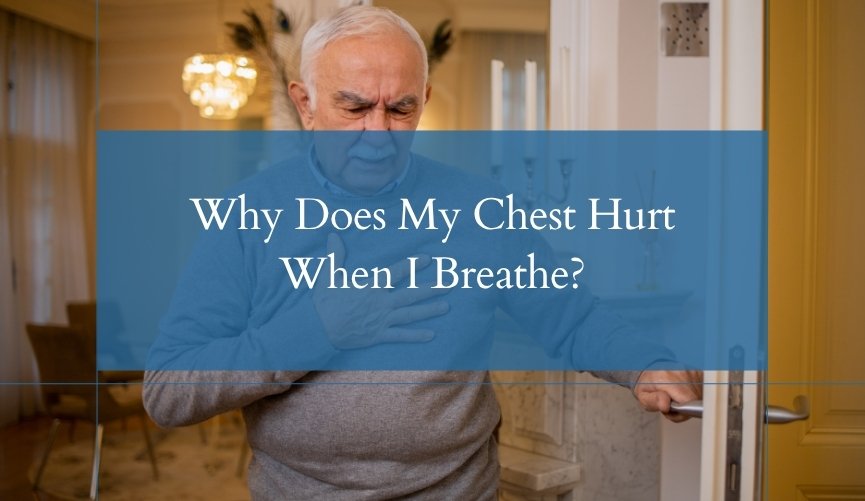
A sharp twinge, a dull ache, or a tight pressure that flares up every time you inhale chest pain while breathing is unsettling no matter how mild it feels. Most of the time it comes from something manageable, like a strained muscle or mild airway irritation. But because the chest also houses the heart and lungs, this symptom deserves a closer look rather than a guess.
The good news is that chest pain has patterns. Where it’s located, what makes it worse, and what other symptoms show up alongside it all give real clues about whether you’re dealing with something minor or something that needs urgent attention. This guide walks through the most common causes, how to tell where the pain is really coming from, and when it’s time to get checked at a clinic like Fattah Primary Care in Spring, TX.
Why Does It Hurt to Take a Deep Breathe?
When you take a deep breath, your ribcage expands, your diaphragm pulls downward, and the thin lining around your lungs (the pleura) stretches to make room for extra air. If any part of that system is inflamed, strained, or irritated, the extra movement of a deep breath pulls on the affected tissue and triggers a sharp or stabbing sensation.
This is sometimes called pleuritic pain because it worsens specifically with breathing, coughing, or laughing, and often eases when you hold your breath or breathe shallowly. The same principle applies to the chest wall muscles and cartilage that connect your ribs to your breastbone.
A deep breath stretches and flexes these structures more than shallow breathing does, so any strain, swelling, or micro-tear in that area becomes far more noticeable the moment you try to fill your lungs completely. This is why people often say the pain ‘catches’ them mid-breath rather than staying constant.
What Causes Chest Pain When Breathing?
Chest pain that changes with breathing usually points to one of four general sources: the lungs, the chest wall muscles and cartilage, the heart, or the digestive system. Age, recent activity, and any accompanying illness all shift which of these is most likely.
A young, otherwise healthy adult who just started a new workout routine is far more likely to be dealing with muscle strain, while someone recovering from a cold with a lingering cough is more likely to be dealing with irritated airways. The table below breaks down the most common causes in each category.
| Source | Common Causes | How It Typically Feels |
| Lungs & Airways | Bronchitis, pneumonia, pleurisy, asthma flare, blood clot in the lung | Sharp or burning pain that worsens with deep breaths, coughing, or lying flat |
| Muscles, Ribs & Cartilage | Pulled chest muscle, costochondritis, rib bruise or injury | Localized, tender pain that worsens when pressing on the area or twisting the torso |
| Heart | Pericarditis, angina, reduced blood flow to the heart | Pressure, tightness, or squeezing that may spread to the arm, jaw, or back |
| Digestive System | Acid reflux, esophageal spasm, gas pressure | Burning sensation behind the breastbone, often worse after eating or lying down |
| Anxiety or Panic | Stress response, hyperventilation | Tightness with rapid breathing, tingling, or a racing heartbeat |
Respiratory infections like bronchitis and pneumonia are two of the most frequent lung-related reasons for chest pain that worsens with breathing, especially when paired with a cough, fever, or fatigue. Getting these treated early helps prevent the pain from lingering or getting worse.
Costochondritis, an inflammation of the cartilage connecting the ribs to the breastbone, is another common but often overlooked cause. It can follow a hard cough, a workout involving the chest or arms, or even a minor bump, and tends to produce pain that’s easy to reproduce simply by pressing on the area. On the digestive side, acid reflux can mimic breathing-related chest pain closely enough to cause confusion, particularly when it happens at night or after a large meal, since lying down allows stomach acid to irritate the esophagus more easily.
How Can You Tell if Chest Pain Is Coming From Your Lungs, Muscles, or Heart?
Location, timing, and accompanying symptoms are the biggest clues. Use the comparison below as a general guide, not a diagnosis; only a provider can confirm the actual cause.
| Possible Source | Pain Pattern | Signs That Point This Way |
| Lungs | Sharp, stabbing, one-sided; worse with deep breaths or coughing | Fever, productive cough, shortness of breath, fatigue |
| Muscles or Ribs | Achy or sharp; worse with movement, touch, or pressing on the spot | Pain reproduced by pressing the chest wall; recent strain or injury |
| Heart | Pressure, tightness, or squeezing; may spread outward | Sweating, nausea, dizziness, pain triggered or worsened by exertion |
As a general rule, pain that is easy to reproduce by pressing on a specific spot is more likely muscular; pain tied closely to breathing and coughing points toward the lungs; and pain that comes with sweating, dizziness, or exertion always warrants urgent evaluation for the heart.
Which Symptoms Along With Chest Pain Should Never Be Ignored?
Chest pain on its own doesn’t always tell the full story; it’s the combination of symptoms that often reveals how urgent the situation is. Chest pain paired with any of the following symptoms should prompt immediate medical attention rather than a wait-and-see approach:
- Shortness of breath that is new, worsening, or happens even at rest.
- Pain that spreads to the arm, shoulder, jaw, neck, or back.
- Sweating, nausea, or lightheadedness occurring alongside the chest pain.
- A rapid, irregular, or pounding heartbeat.
- Coughing up blood or blood-tinged mucus.
- Bluish lips or fingertips, which can signal low oxygen levels.
- Fainting or feeling like you might pass out.
- High fever with chills alongside chest pain and a productive cough.
None of these signs are things to monitor from home overnight. They’re a signal to get evaluated the same day, either at an urgent care, a primary care visit if one is available quickly, or an emergency room if the symptoms are severe.
Can Chest Pain While Breathing Go Away on Its Own?
Yes, in some cases. Mild chest wall strain, minor rib bruising, or brief muscle irritation often improves within a few days with rest, gentle stretching, and over-the-counter pain relief. Chest pain tied to a passing bout of acid reflux or gas can also resolve on its own once the trigger clears.
Recovery time depends heavily on the cause. Muscle-related pain from a strain or minor injury typically eases within three to seven days as inflammation settles down. Pain linked to a respiratory infection tends to track along with the illness itself, improving as congestion clears and the cough loosens up. Reflux-related discomfort often comes and goes with meals and posture, easing once the digestive trigger is addressed.
However, self-resolving chest pain still has patterns worth watching:
- Likely to resolve on its own: mild, localized pain that improves daily, doesn’t worsen with exertion, and isn’t paired with fever, shortness of breath, or dizziness.
- Needs medical evaluation: pain that persists beyond a week, keeps recurring, gets worse over time, or comes back every time you exert yourself.
If you’re ever unsure whether your chest pain falls into the first category or the second, it’s always safer to have it checked rather than assume it will pass.
When Should You Visit a Primary Care Provider or Urgent Care?
Not every case of chest pain while breathing needs an emergency room visit. When there are no red-flag symptoms, a primary care or urgent care visit is usually the right first step to figure out the cause and start treatment.
At Fattah Primary Care, our providers take the time to review your symptoms, listen to your lungs and heart, and order the right tests to pinpoint the cause of your chest pain. If you’re due for a check on your cardiovascular health, a Men’s Physical Exam or Women’s Physical is also a good opportunity to review chest pain history, blood pressure, and heart risk factors as part of a routine visit.
Bottom Line
Chest pain that changes with breathing is usually caused by something manageable, like a strained muscle or mild airway irritation, but it can also be the lungs, heart, or digestion signaling something more serious. Watch for red flags like spreading pain, shortness of breath, sweating, or dizziness, and never wait those out. When in doubt, get it checked; a quick visit brings clarity and the right treatment plan.
Don’t let chest pain linger without answers; our providers are here to listen, evaluate, and guide you toward the right next step. Visit Fattah Primary Care to learn more about our services and book your visit today
FAQs
Q1. Can stress or anxiety cause chest pain when breathing?
Yes. Anxiety can cause chest tightness and changes in breathing that may feel like heart-related pain. However, sudden or severe chest pain should always be evaluated by a healthcare provider.
Q2.Is chest pain when breathing linked to respiratory infections like COVID-19 or the flu?
Yes. Respiratory infections can inflame the lungs or airways, causing pain with deep breaths or coughing. It is often accompanied by symptoms like fever, cough, congestion, or fatigue.
Q3. Can poor posture contribute to chest pain while breathing?
Yes. Poor posture can strain chest muscles and make deep breathing uncomfortable. Improving posture and taking regular movement breaks often helps relieve the pain.
Q4. Does cold weather make chest pain worse when breathing?
Yes. Cold, dry air can irritate the airways, especially in people with asthma or sensitive lungs. This may cause chest tightness or discomfort during deep breaths.
Q5. Can asthma cause chest pain when breathing?
Yes. Asthma can cause chest tightness or mild pain when the airways become inflamed. It is usually accompanied by wheezing, coughing, or shortness of breath.
Q6. What tests might a doctor use to figure out the cause of chest pain?
A doctor may perform an EKG, chest X-ray, blood tests, or check your oxygen levels. These tests help identify whether the pain is related to the heart, lungs, or another condition.