

I feel fine, so why do I need a checkup?” It’s one of the most common things primary care doctors hear, and it’s also one of the riskiest assumptions people make about their health. Feeling well and being well aren’t always the same thing. Many of the most serious health conditions in the U.S., including high blood pressure, type 2 diabetes, and high cholesterol, develop silently for years before a person notices any symptoms at all.
An annual physical exam isn’t just a formality for when you’re sick. It’s a proactive checkpoint that helps your doctor catch problems while they’re still small, manageable, and most importantly treatable. We’ll break down exactly why annual physicals matter, what they catch that you can’t feel on your own, what to expect during your visit, and how often you actually need one based on your age.
The Problem With “I Feel Fine”
Your body doesn’t always send a warning signal before something goes wrong. Several of the most common chronic diseases are known as “silent” conditions because they show few or no symptoms in their early stages:
- High blood pressure (hypertension): Millions of adults have it and don’t know it, since it rarely causes noticeable symptoms until it leads to a heart attack or stroke.
- Type 2 diabetes: Blood sugar can creep upward for years before symptoms like fatigue or frequent urination appear.
- High cholesterol: There’s no way to feel elevated cholesterol; it’s only detectable through a blood test.
- Early-stage kidney disease: Often has no symptoms until significant kidney function is already lost.
By the time symptoms do show up, these conditions have often been progressing for years. An annual physical is designed to catch these issues at the blood-test stage, long before they become emergencies.
What an Annual Physical Actually Does for You
A yearly physical isn’t just about ruling out disease; it’s a complete check-in on your overall health. Here’s what it accomplishes:
| Purpose | What It Means for You |
| Early detection | Blood work and screenings can catch problems like diabetes, high cholesterol, or anemia before symptoms appear. |
| Baseline tracking | Your doctor builds a record of your normal blood pressure, weight, and lab values, making it easier to spot changes over time. |
| Personalized prevention | Screenings and vaccines are tailored to your age, sex, and family history rather than one-size-fits-all. |
| Medication & symptom review | A chance to flag new symptoms, medication side effects, or health questions you’ve been putting off. |
| Relationship with a doctor | Regular visits build a rapport with a provider who knows your history, which matters if something urgent ever comes up. |
Real Consequences of Skipping It
It’s easy to put off a checkup when nothing feels wrong. But delayed diagnosis is one of the most common reasons chronic diseases become harder and more expensive to treat. According to CDC data, roughly 11 million adults with hypertension are unaware they have it, and another 7 million Americans are living with undiagnosed diabetes. Both are conditions that a simple annual blood pressure check and blood test can reveal early.
Consider this: a patient who avoided doctors for two decades only discovered dangerously high blood pressure because an eye exam happened to flag it despite feeling completely normal. He was at risk for a heart attack or stroke and had no idea, because he felt fine. This is exactly the scenario annual physicals are designed to prevent.
Common conditions caught during “routine” physicals:
- Hypertension (high blood pressure)
- Type 2 diabetes or prediabetes
- High cholesterol
- Anemia or vitamin deficiencies
- Thyroid dysfunction
- Early signs of kidney or liver issues
- Skin changes that may indicate skin cancer
- Weight-related risk factors
If any of these sound like something you’ve been wondering about, our Annual Physical Exam service is built around exactly this kind of early identification and long-term monitoring.
What Happens During an Annual Physical?
A typical annual physical combines a conversation about your health history with a hands-on exam and, often, lab work. Here’s a general breakdown of what to expect:
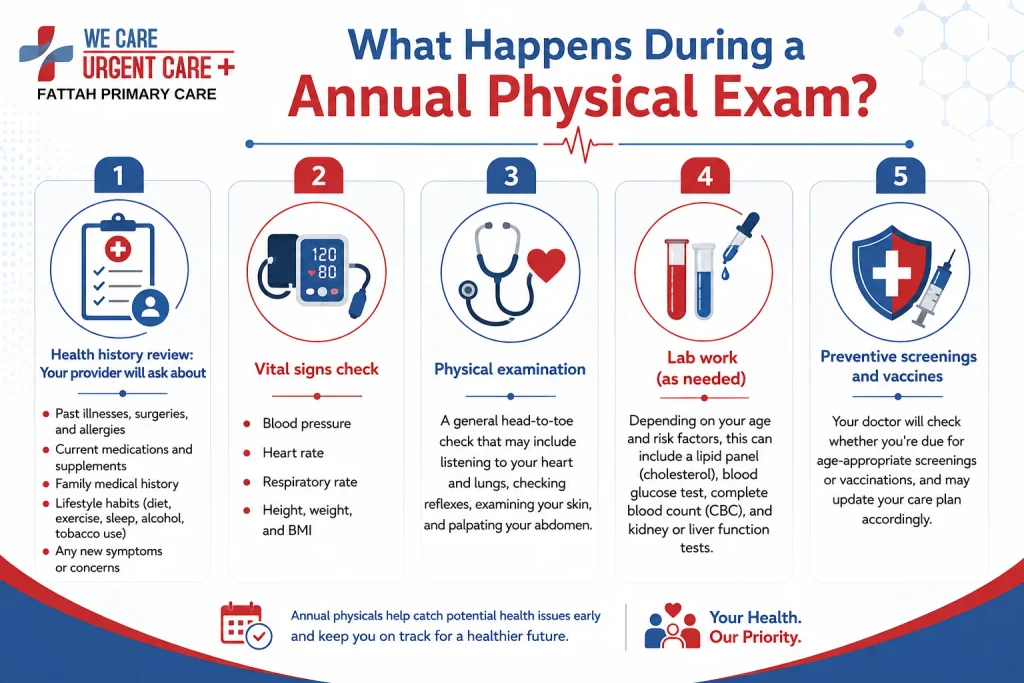
1. Health history review: Your provider will ask about
- Past illnesses, surgeries, and allergies
- Current medications and supplements
- Family medical history
- Lifestyle habits (diet, exercise, sleep, alcohol, tobacco use)
- Any new symptoms or concerns
2. Vital signs check
- Blood pressure
- Heart rate
- Respiratory rate
- Height, weight, and BMI
3. Physical examination
A general head-to-toe check that may include listening to your heart and lungs, checking reflexes, examining your skin, and palpating your abdomen.
4. Lab work (as needed)
Depending on your age and risk factors, this can include a lipid panel (cholesterol), blood glucose test, complete blood count (CBC), and kidney or liver function tests.
5. Preventive screenings and vaccines
Your doctor will check whether you’re due for age-appropriate screenings or vaccinations, and may update your care plan accordingly.
How Often Do You Actually Need One?
There’s no single rule that applies to everyone; it depends on your age, health history, and risk factors. Here’s a general guideline:
| Age Group | General Recommendation |
| 18–39 (healthy, low risk) | Every 1–2 years |
| 40–49 | Annually |
| 50–64 | Annually, with added cancer and heart screenings |
| 65+ | Annually, with focus on chronic disease, bone health, and cognitive screening |
| Anyone with a chronic condition (diabetes, hypertension, heart disease) | Every 3–6 months, or as directed by your doctor |
Age-Specific Screenings Worth Knowing About
As you get older, your annual physical naturally expands to include screenings relevant to your stage of life:
- 20s–30s: Baseline cholesterol, blood pressure, mental health check-ins, and reproductive health counseling
- 40s: Diabetes screening, cholesterol monitoring, and discussions around family cancer history
- 45+: Colorectal cancer screening (colonoscopy or stool-based test)
- 50+: Prostate screening conversations for men, shingles vaccine, bone density considerations
- 65+: Cognitive screening, osteoporosis screening, and vaccines like pneumonia and shingles
Women’s and men’s physicals often diverge slightly at this stage; women may be advised on breast and cervical screenings, while men are guided on prostate health. If you’re due for one, our Women’s Physical and Men’s Physical Exam visits are structured around exactly these age- and sex-specific guidelines
Final Thoughts
Feeling healthy is a good sign, but it’s not the full picture. Many of the conditions that affect long-term health, like high blood pressure, high cholesterol, and diabetes, develop quietly and rarely announce themselves until they’ve already caused damage.
An annual physical is one of the simplest, lowest-cost ways to stay ahead of that risk, catch issues while they’re still easy to manage, and build an ongoing relationship with a doctor who actually knows your health history.
If it’s been a while since your last checkup, Fattah Primary Care makes it simple to get seen with unhurried appointments, same-day availability, and a team that actually takes the time to listen.