
Sneezing is one of the body’s natural defense mechanisms that helps remove irritants like dust, pollen, viruses, bacteria, and allergens from the nasal passages. While occasional sneezing is common, constant sneezing or repeated sneezing attacks can become exhausting and disruptive.
If you’ve been searching for answers like “why am I sneezing so much,” “can’t stop sneezing,” or “how to stop sneezing fast,” this comprehensive guide explains the causes, treatments, natural remedies, prevention tips, and when to seek medical care.
At Fattah Primary Care, we help patients diagnose and treat allergies, sinus infections, cold symptoms, and respiratory conditions that trigger persistent sneezing.
How to Stop Sneezing Fast
If you need immediate relief, these methods may help stop sneezing quickly:
- Use saline nasal spray
- Avoid pollen, dust, and smoke
- Drink warm fluids
- Take antihistamines for allergy symptoms
- Wash your face after outdoor exposure
- Use a humidifier
- Inhale steam
- Stay hydrated
These remedies can calm irritated nasal passages and reduce sneezing naturally.
What Causes Sneezing?
Seasonal Allergies
One of the leading causes of constant sneezing is allergic rhinitis, also known as hay fever.
Common allergy triggers include:
- Pollen
- Dust mites
- Mold
- Pet dander
- Grass
- Smoke
Seasonal allergies often cause:
- Sneezing fits
- Itchy nose
- Runny nose
- Watery eyes
- Nasal congestion
If allergies are affecting your daily life, professional Allergy Treatment Services may help reduce symptoms and improve breathing comfort.
You may also experience skin irritation from allergies. Read more about How Do Allergies Affect Skin?.
Common Cold
If you’re wondering “why am I sneezing so much with a cold?”, viral infections are a common reason.
Cold-related sneezing often occurs alongside:
- Runny nose
- Sore throat
- Mild fever
- Fatigue
- Nasal congestion
Early treatment may help shorten recovery time. Learn more about Fever and Flu Treatment for Adults.
You can also explore the difference between illnesses in Food Poisoning vs Stomach Flu and Is Flu A or B Worse?.
Sinus Infections
Sinus inflammation can irritate nasal tissues and trigger repeated sneezing.
Symptoms may include:
- Facial pressure
- Thick mucus
- Headaches
- Postnasal drip
- Nasal blockage
Persistent symptoms may require Sinus Infection Treatment.
If you also experience throat discomfort, read Can Strep Throat Cause Ear Pain?.
Environmental Irritants
Strong odors and polluted air can trigger sneezing episodes.
Common irritants include:
- Perfume
- Cigarette smoke
- Cleaning chemicals
- Air pollution
- Dry air
Long-term exposure to irritants may worsen respiratory symptoms and sinus inflammation.
Dust Allergies
Dust allergies are a major cause of can’t stop sneezing symptoms, especially indoors.
You may notice symptoms:
- In the morning
- While cleaning
- Around carpets or bedding
- In air-conditioned rooms
Indoor allergens can also contribute to respiratory illnesses such as Bronchitis Treatment and recurring sinus infections.
You can also learn more in Is Bronchitis Contagious?.
Allergy vs Cold vs Sinus Infection
Many people confuse allergies, colds, and sinus infections because the symptoms can feel similar. However, understanding the difference can help you choose the right treatment.
| Symptom | Allergies | Cold | Sinus Infection |
| Sneezing | Very Common | Common | Sometimes |
| Fever | Rare | Common | Sometimes |
| Itchy Eyes | Very Common | Rare | Rare |
| Runny Nose | Common | Common | Common |
| Facial Pressure | Rare | Mild | Severe |
| Thick Mucus | Rare | Sometimes | Very Common |
| Duration | Weeks/Seasonal | 7–10 Days | Often Persistent |
Why Am I Sneezing So Much?
If you keep asking “why am I sneezing so much continuously?”, it may indicate ongoing exposure to allergens or chronic nasal irritation.
Frequent sneezing is commonly linked to:
- Seasonal allergies
- Dust allergies
- Viral infections
- Indoor allergens
- Chronic sinusitis
- Airborne irritants
Keeping a symptom journal may help identify triggers.
Why Do I Sneeze After Waking Up?
Morning sneezing is commonly caused by:
- Dust mites in bedding
- Dry indoor air
- Pet dander
- Overnight mucus buildup
- Allergic rhinitis
Washing bedding regularly and using an air purifier may help reduce symptoms.
Can’t Stop Sneezing? Here’s What To Do
If you can’t stop sneezing, these remedies may help calm your symptoms quickly.
Use Saline Nasal Spray
Saline rinses help flush out:
- Dust
- Pollen
- Allergens
- Excess mucus
This reduces nasal inflammation naturally.
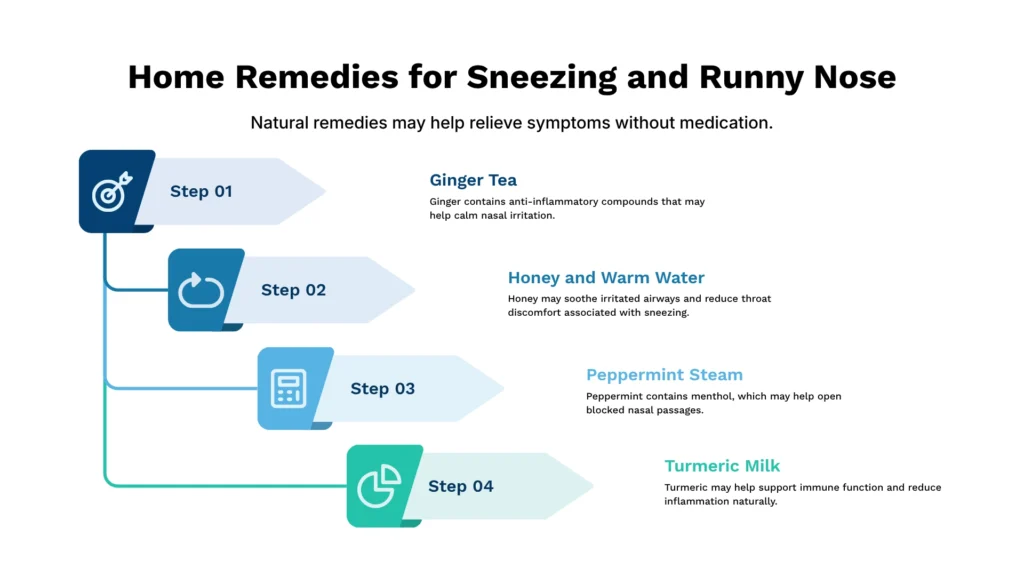
Drink Warm Fluids
Warm beverages can soothe irritated nasal passages and loosen mucus.
Helpful options include:
- Herbal tea
- Warm lemon water
- Soup broth
Staying hydrated also supports immune health and recovery from respiratory infections.
Try Steam Inhalation
Steam therapy may reduce congestion and calm inflamed nasal tissues.
You can:
- Take a hot shower
- Use a humidifier
- Inhale steam from hot water
Steam may also help patients struggling with sinus pressure and congestion.
Take Antihistamines
Antihistamines can reduce:
- Sneezing
- Runny nose
- Itchy eyes
- Allergy symptoms
Always follow label instructions or speak with a healthcare provider.
Avoid Allergy Triggers
Reducing allergen exposure is essential for long-term relief.
Try to avoid:
- Dust
- Smoke
- Pet hair
- Strong fragrances
- Outdoor pollen
What To Do When You Can’t Stop Sneezing
If home remedies are not helping, persistent sneezing may require medical evaluation.
Seek professional care if you experience:
- Fever
- Wheezing
- Difficulty breathing
- Severe congestion
- Facial pain
- Thick yellow mucus
These symptoms could indicate infections or chronic allergy conditions.
At Fattah Primary Care , we provide personalized care for allergy symptoms, respiratory infections, and sinus conditions.
Patients with persistent respiratory symptoms may also benefit from Pneumonia Treatment or Ear Infection Treatment if symptoms worsen.
Why Do I Sneeze 20 Times in a Row Everyday?
Repeated sneezing fits are usually caused by prolonged nasal irritation.
Common reasons include:
- Dust allergies
- Pollen exposure
- Pet dander
- Chronic sinus irritation
- Indoor allergens
Sneezing multiple times in a row is your body’s attempt to remove irritants from the nasal passages.
How to Make a Sneeze Go Away
If you feel a sneeze coming, these methods may help stop it temporarily:
- Pinch your nose gently
- Breathe through your mouth
- Press your tongue against the roof of your mouth
- Sip cold water
- Avoid bright light exposure
When Should You See a Doctor?
You should seek medical attention if sneezing:
- Lasts longer than two weeks
- Interrupts sleep
- Causes breathing difficulties
- Occurs with fever or severe sinus pain
- Worsens over time
Persistent sneezing may require allergy testing or prescription treatment.
You can contact Fattah Primary Care for evaluation and personalized care.
Final Thoughts
Sneezing is common, but constant sneezing, allergy symptoms, or repeated sneezing attacks can significantly affect your daily life. Understanding what causes sneezing and learning how to stop sneezing fast can help you manage symptoms more effectively.
If your symptoms continue or worsen, the team at Fattah Primary Care can help diagnose the underlying cause and provide effective treatment options for allergies, sinus infections, and respiratory conditions.
FAQs
How do you stop sneezing fast?
To stop sneezing fast, try saline nasal spray, steam inhalation, antihistamines, warm fluids, and avoiding allergens like dust and pollen.
How to make a sneeze go away?
You can make a sneeze go away by pinching your nose gently, breathing through your mouth, pressing your tongue against the roof of your mouth, or sipping cold water.
Why am I sneezing so much continuously?
If you are sneezing continuously, common causes include allergies, sinus infections, colds, dust exposure, pet dander, and indoor air irritants.
Why do I sneeze 20 times in a row everyday?
Sneezing repeatedly every day may happen because of seasonal allergies, dust allergies, chronic sinus irritation, or environmental triggers inside your home or workplace.
What does 7 sneezes in a row mean?
Seven sneezes in a row usually mean your body is reacting strongly to allergens or nasal irritation. It is commonly associated with allergies, dust exposure, or colds.
Why am I sneezing so much with a cold?
Colds cause inflammation and excess mucus inside the nose, which can trigger frequent sneezing, congestion, and runny nose symptoms.
What to do when you can’t stop sneezing?
When you can’t stop sneezing, avoid allergens, use saline nasal spray, drink warm fluids, take antihistamines if needed, and seek medical care if symptoms persist.